
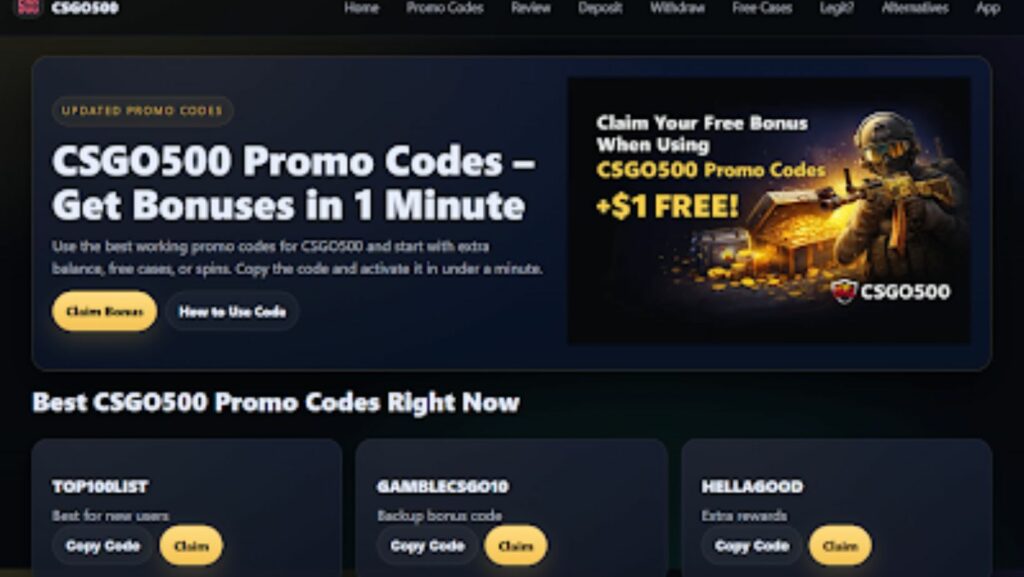
If you’ve spent any time in the CS:GO world lately, you’ve probably noticed something popping up everywhere: referral codes for CSGO500. Basically, these are little links or codes that let players earn rewards for getting their friends to join the platform. On the surface, it might sound like just another marketing gimmick, but in reality, it’s changing the way people play, team up, and even compete.
Referral codes aren’t just about free coins or bonuses. They’re shaping communities, driving new players into tournaments, and even influencing how teams form. You see streamers dropping their codes, friends egging each other on to sign up, and suddenly these little codes are everywhere. In this article, we’re going to break down how CSGO500 referral code affect the community, everything from social connections and competitive play to tournaments and the overall vibe of the scene. It’s a small feature with a surprisingly big impact, and it’s worth looking at what it really means for competitive gaming.
Understanding CSGO500 Referral Codes
Referral codes on CSGO500 are one of those small features that actually make a huge difference if you pay attention. At first glance, it’s just a code you can share, but in reality, it’s shaping how players join, interact, and even compete. Let’s break down everything you need to know, step by step.
What they are
Before we get into how they work, it’s important to understand what referral codes actually are. These aren’t just random strings of letters, they’re a system designed to reward players and grow the community. Here’s the lowdown:
- Your personal invite: Each CSGO500 player gets their own unique code. Think of it as your VIP pass into the platform. You give it to friends, they join, and both of you get a reward. Simple, but powerful.
- Mutual rewards: The cool thing about these codes is that they benefit both sides. You get bonuses like coins, free spins, or special perks, and your friend gets the same. It’s literally a “we both win” setup, and who doesn’t love free stuff?
- Community-building tool: Referral codes aren’t just about perks, they’re about connecting people. One friend invites another, and suddenly a small squad can grow into a mini-community. It’s a subtle way CSGO500 encourages social play without forcing it.
How they work
Now that you know what referral codes are, let’s talk about how they actually work. The mechanics are simple, but the effects are huge.
- Getting your code: You log in, go to your account settings, and boom, you’ve got your personal referral code.
- Sharing your code: This is where the social side kicks in. Players share codes in Discord servers, Reddit threads, Twitch streams, or just DM them to friends. Streamers dropping their codes during a live stream? That can literally send hundreds of new players onto the platform in minutes.
- Claiming rewards: When someone signs up with your code, both accounts automatically get credited. Some rewards are instant, like coins or spins, while others are progressive, maybe as your friend plays more, you get more. It’s a “keep spreading the love” loop that feels almost addictive.
- Tiered referrals: Some codes even have a multi-level system. If the friend you referred brings in others, you get extra bonuses. It’s like a ripple effect, encouraging players to keep sharing their codes and creating a small referral “chain reaction.”
How popular they are
At this point, you might be wondering: is this actually a big deal, or just a minor perk? The answer: big deal. Referral codes are everywhere in CSGO500, and here’s why:
- Widespread adoption: Most active players either share a code or are looking for one to claim rewards. Skipping referral codes is basically leaving free coins on the table.
- Streamer hype: Popular streamers are constantly dropping their codes, which encourages followers to join. Fans use the code to support their favorite streamer and snag rewards for themselves. It’s like combining social clout with free perks, a double win.
- Event integration: CSGO500 often links referral codes to tournaments or special events. Sometimes, using a code can even give you extra access or bonuses in competitions. That makes the codes more than a marketing tool, they actually become part of competitive play.
- Community ritual: Sharing codes has almost become a social game in itself. Players swap them in forums, group chats, and streams. Some even track how many friends they’ve gotten on their code. It’s playful, competitive, and social all at once, a mini-game on top of the main CS 2 game.
Community Engagement Effects
Referral codes in CSGO500 might look like a tiny feature, a few letters you can share for some coins, but they actually shape how the community grows, how people connect, and how long they stick around.

Seriously, a small thing like this can have a surprisingly big impact if you pay attention. Let’s break down the main ways they affect the community, one by one.
Player Recruitment
The first and most obvious effect is how these codes bring new players into the game. Think of it like a “friend recommendation,” but with rewards attached. Here’s why it works so well:
- Expanding the player base: When someone shares their ative promo code, it’s like a personal invite from a friend. Unlike random ads or banners, this feels authentic. You’re more likely to check it out because it comes with social proof, someone you know is already playing and says it’s fun. That’s why referral codes are a super-efficient way for CSGO500 to grow its player base organically.
- Lowering the entry barrier: New players often hesitate to dive into competitive platforms, they feel behind, worried they’ll get crushed, or unsure what to do first. Referral codes give them a small leg up: coins, free spins, or perks that make starting easier and more enjoyable. Suddenly, jumping in doesn’t feel like a gamble, it feels like getting a welcome kit from a friend.
- Viral loops: One referral often leads to another. Your friend joins, gets their own code, and brings in someone else. It’s like a chain reaction. A single code can ripple through communities, creating an almost snowball effect of new players. That’s why you see forums and Discord servers flooded with referral requests, it works.
Social Connectivity
Referral codes aren’t just about recruiting, they’re about connecting people once they’re in the game. They encourage players to team up, form clans, and build real social bonds.
- Playing with friends: When you refer a friend, chances are you’ll end up playing together. Suddenly, you’re not grinding solo, you have someone to strategize with, laugh with, and trash-talk with. That shared experience makes the game way more engaging than playing alone.
- Clan and community growth: Small groups use referral codes to recruit new members. Someone invites a friend, that friend invites more, and suddenly a casual squad becomes a mini-community. You’ve got teams forming, clans growing, and people developing group strategies. It’s like a tiny esports ecosystem forming organically.
- Shared goals and rewards: These codes give players a reason to care about each other’s progress. If your friend joins using your code, both of you benefit. That shared incentive encourages collaboration, even outside the game. Suddenly, playing together isn’t just fun, it’s productive, rewarding, and socially engaging.
User Retention
Referral codes don’t just get players in the door, they keep them coming back. They’re subtle but effective at building long-term engagement.
- Incentivizing continued play: Some rewards aren’t just one-time bonuses. Maybe you earn more coins or spins as your referred friend keeps playing. This encourages players to log in regularly instead of just signing up once and forgetting about it.
- Creating loyalty loops: Seeing the direct benefits of your friends joining keeps you invested. And if your friends are actively playing, it’s hard to step away. You don’t want to miss out on the shared rewards or the social fun, so you stay engaged longer.
- Adding social accountability: Once you’ve invited a friend, there’s a subtle social push to stick around, maybe you play together, maybe you help them learn the ropes, maybe you compete to see who climbs the ranks faster. That social connection makes the platform more sticky and fun.
Influence on Competitive Gaming
Referral codes in CSGO500 aren’t just little perks for free spins or coins, they actually have a surprisingly big impact on the competitive side of the platform. Whether it’s shaping who plays, how teams form, or how tournaments unfold, these codes subtly influence the competitive ecosystem in ways most players don’t even realize. Let’s dig in.
Skill Distribution
The first thing referral codes affect is the mix of players in the game. You might think codes just bring in casual newbies, but that’s not the whole story.
- A mix of casuals and pros: Sure, some people join just for free rewards or because their friend nagged them. But others are more experienced and competitive, they follow streamers or join because they want to play seriously. That mix creates a more dynamic environment: casual players keep it fun and social, while experienced players raise the overall skill level.
- Upskilling opportunities: New players often get thrown into games with veterans, and that’s actually a hidden benefit. Experienced players might mentor or teach without even realizing it, and newcomers pick up strategies faster than they would on their own. Over time, the average skill level rises, which is good for the competitive scene as a whole.
- Temporary challenges: Of course, having a sudden influx of casual players can make some matches uneven at first. Maybe a tournament or ranked game feels a little off-balance. But usually, it’s short-lived, casual players improve, and the overall scene gets stronger and more diverse.
Tournament Participation
Referral codes also have a surprising effect on who enters tournaments and how often:
- More people playing tournaments: Players who join via referral codes often get bonus incentives for entering competitions. Even a small reward, extra coins or spins, can push someone to sign up for a tournament they might’ve ignored otherwise. The result? More entries and livelier events.
- Diverse competition: Because referral codes attract both casual and competitive players, tournaments often see a mix of skill levels. Newcomers get a chance to test themselves, while veterans encounter fresh strategies or unpredictable playstyles. This makes competitions feel less repetitive and more exciting.
- Consistency and retention: Referral codes also subtly encourage players to stay active. If you joined through a friend’s code, you’re more likely to stick around and compete regularly. That steady participation is crucial for keeping tournaments populated and the competitive scene thriving.
Team Dynamics
The way players join through referral codes also shapes how teams are formed, how well they communicate, and how they perform:
- Community-driven recruitment: Many players use referral codes to bring friends or clanmates into teams. Teams that start with pre-existing social bonds often have better communication, trust, and coordination. Basically, if you already know your teammates, it’s easier to win together.
- Cohesion vs. diversity: Teams formed mostly from friends have strong cohesion, but there’s a catch. They might miss out on skill diversity or new strategies. Top-level teams need to balance familiar teammates with new players to maximize both teamwork and skill variety.
- Influence on strategies: How a team is formed can change how they play. Referral-driven teams may focus more on collaboration and long-term synergy rather than just picking the highest-ranked players. This adds an interesting social layer to the competitive scene, strategy isn’t just about raw skill, it’s also about relationships.
Economic and Market Impacts
Referral codes on CSGO500 might look like a tiny perk, a few letters you can share to get some free coins, but if you step back, they actually have major financial and market consequences. They affect how the platform earns money, how players interact with items and bets, and even raise some interesting ethical questions. Let’s break it all down.
Monetization
Let’s start with the obvious one: money. Referral codes aren’t just “fun extras”, they’re actually a clever way for CSGO500 to boost revenue. Here’s how:
- Getting players to spend: When someone joins with a referral code, they often start with a little bonus, coins, spins, or a starter pack. That feels great at first, but the real trick is keeping them playing. Once they’re invested, new players are more likely to deposit their own money to stay competitive or just to keep the fun going. It’s a small nudge that turns casual players into paying users.
- More activity = more revenue: The more people on the platform, the more bets, spins, and in-game purchases happen. Even if each individual spends just a little, hundreds or thousands of new players joining through referral codes add up fast. That’s why CSGO500 loves this system, it’s essentially free marketing that also drives engagement and cash flow.
- Player-driven marketing: Instead of spending huge amounts on ads, the platform gets its users to do the work. Every referral shared is free promotion, and because it’s coming from friends or popular streamers, it’s far more effective than a random banner ad. Players trust it more, and the platform benefits economically without spending a dime.
- Psychology of engagement: Let’s be real, getting a friend’s referral bonus feels rewarding. That little dopamine hit encourages players to keep playing and sometimes spending. You’re socially invested, you’ve got a friend in the game, and suddenly tossing a few coins into the platform doesn’t feel like a big deal.
Secondary Markets
Referral codes also have ripple effects outside the main platform, influencing trading, betting, and sponsorships:
- Impact on betting: More players entering through referral codes means bigger betting pools. More entrants = more dynamic odds and higher stakes, which makes betting more exciting. Tournaments suddenly feel more unpredictable, which draws attention from spectators and bettors alike.
- In-game economy and trading: When new players join via referral bonuses, they often trade or sell items they receive. Skins, coins, and spins start moving faster in the economy, keeping trading active and sometimes even affecting item prices. A growing player base can really shake up the market in interesting ways.
- Influencer and sponsorship opportunities: Streamers who promote their referral codes are creating business opportunities for themselves and the platform. Brands might sponsor giveaways or events tied to codes. This turns what looks like a simple player feature into a marketing tool that can generate significant revenue.
Incentive Structures
Finally, referral codes raise some interesting questions about motivation and ethics:
- Monetizing friendships: At its core, referral codes turn social connections into revenue streams. You invite a friend, they spend money, the platform benefits, and you get rewards too. It works, but it also raises questions: is it okay to profit off someone else’s social circle in gaming?
- Potential for abuse: Some people try to game the system, creating multiple accounts, farming referral rewards, or exploiting loopholes. Platforms have to balance incentives with fairness, which is tricky. Too strict, and players feel punished; too loose, and people exploit it.
- Behavioral impact: Referral rewards subtly change player behavior. Instead of focusing purely on improving skill or playing fair, some players prioritize recruitment and rewards. This can shift the social culture and competitive balance in subtle ways.
- Sustainability concerns: Another consideration, if players are only motivated by rewards, they might leave once bonuses dry up. Platforms need to design referral incentives carefully so that they encourage engagement without making the community dependent on constant rewards.
Social and Cultural Implications
Referral codes on CSGO500 aren’t just about free coins or bonuses, they actually shape the social vibe of the entire community. They influence how people play together, how competitions form, how influencers interact with fans, and even how welcoming the platform feels to newcomers. Let’s dive into all the ways these codes ripple through the social and cultural side of the game.
Community Behavior
Referral codes subtly change how players interact with each other. They encourage collaboration, spark rivalry, and sometimes even create tension.
- Encouraging teamwork: The most obvious effect is collaboration. When you invite a friend with your referral code, both of you get bonuses. That means players are naturally motivated to team up, strategize, and help each other improve. Suddenly, playing solo feels less appealing, and forming small squads or “mini-clans” becomes the default way to engage with the game.
- Fueling friendly competition: Referral codes also bring out a little bit of rivalry. Players start comparing how many friends signed up through their code, who’s earning the most rewards, or which group is the “top referrer.” This kind of competition is usually harmless and even fun, it drives engagement and gives players bragging rights.
- Potential for toxicity: But there’s a flip side. Sometimes this competition goes too far. You get people spamming referral codes in chats, pressuring friends to sign up, or getting upset if they feel left behind. In rare cases, this can lead to toxicity in the community. The platform has to balance incentives with healthy social interaction to keep the vibe positive.
Influencer Culture
Referral codes have become a huge part of how influencers and streamers shape CSGO500. They’re no longer just about personal play, they’re about visibility and social influence.
- Promoting codes on streams: Popular streamers shout out their referral codes during live streams or social posts. Fans use these codes to get rewards while supporting their favorite content creators. This builds a direct connection between the streamer, their viewers, and the platform. Everyone wins: the streamer grows their audience, the player gets perks, and CSGO500 gains new users.
- Guiding player behavior: Because influencers are often the first point of contact for newcomers, the referral code they promote can shape where players start. A fan might join the platform specifically to use their favorite streamer’s code. This creates a unique ecosystem where influencer popularity directly affects user growth and engagement.
- Gamifying referrals: Some streamers turn referral codes into mini-games or challenges. For example, they might track how many new players sign up each week, give shoutouts to top referrers, or even host small competitions tied to code usage. It’s a mix of entertainment, social recognition, and economic incentive, and it makes the referral system feel like part of the game itself.
Accessibility
Referral codes also affect how easy or hard it is for new players to join and thrive. They can open doors, or accidentally create small barriers.
- Lowering the entry barrier: For new players, referral codes can make the platform feel more welcoming. Bonuses like free coins, spins, or starter packs give beginners a little boost, helping them compete without spending money immediately. This is especially useful for casual gamers or people hesitant to jump straight into competitive play.
- Creating subtle challenges: On the flip side, if a lot of perks are tied to referral codes, players without social connections might feel left out. Someone who joins without a friend’s code might feel at a disadvantage, which could make the platform seem intimidating at first. Balancing rewards so newcomers can still compete fairly is key.
- Bridging communities: When done right, referral codes actually help connect players across regions, skill levels, and social circles. A new player might join because a friend across the world shared a code, and suddenly they’re part of a diverse, global mini-community. It’s a way of breaking down barriers while building connections.