At first glance, a blackjack table and a lottery terminal seem worlds apart. One is a stage for strategy, quick decisions, and the illusion of control. The other is a monument to pure, unadulterated chance. For a game developer, however, they are two sides of the same coin, both governed by the unassailable laws of probability. Understanding how to apply these laws across different game mechanics is fundamental to creating balanced, engaging, and commercially viable products. The core principles that dictate the odds in a card game are the very same ones that build the staggering jackpots of a national lottery.
Have you ever considered how the mathematical model shifts when player skill enters the equation? This is where the true art of game design emerges.
Modeling Player Agency in Skill-Based Games
When designing a game like blackjack, developers aren’t just calculating static odds; they are modeling a dynamic system that includes player choice. The probability of winning a hand isn’t a single number but a spectrum of possibilities influenced by player decisions. A developer must account for the “optimal” path, known as basic strategy, which represents the mathematically correct play for every possible hand against the dealer’s up-card.
Mastering the statistical intricacies of blackjack is a prime example, where players employing optimal strategy can reduce the house edge to below 0.5% in many popular rule sets. The game’s design must therefore build in a house edge that withstands this optimal play while still providing enough winning experiences to keep players engaged. This involves a deep understanding of conditional probability and decision trees.
Now, let’s shift our focus from the card table to the lottery drum. The mathematical challenge here is entirely different.
The Core Distinction: Dependent vs. Independent Events
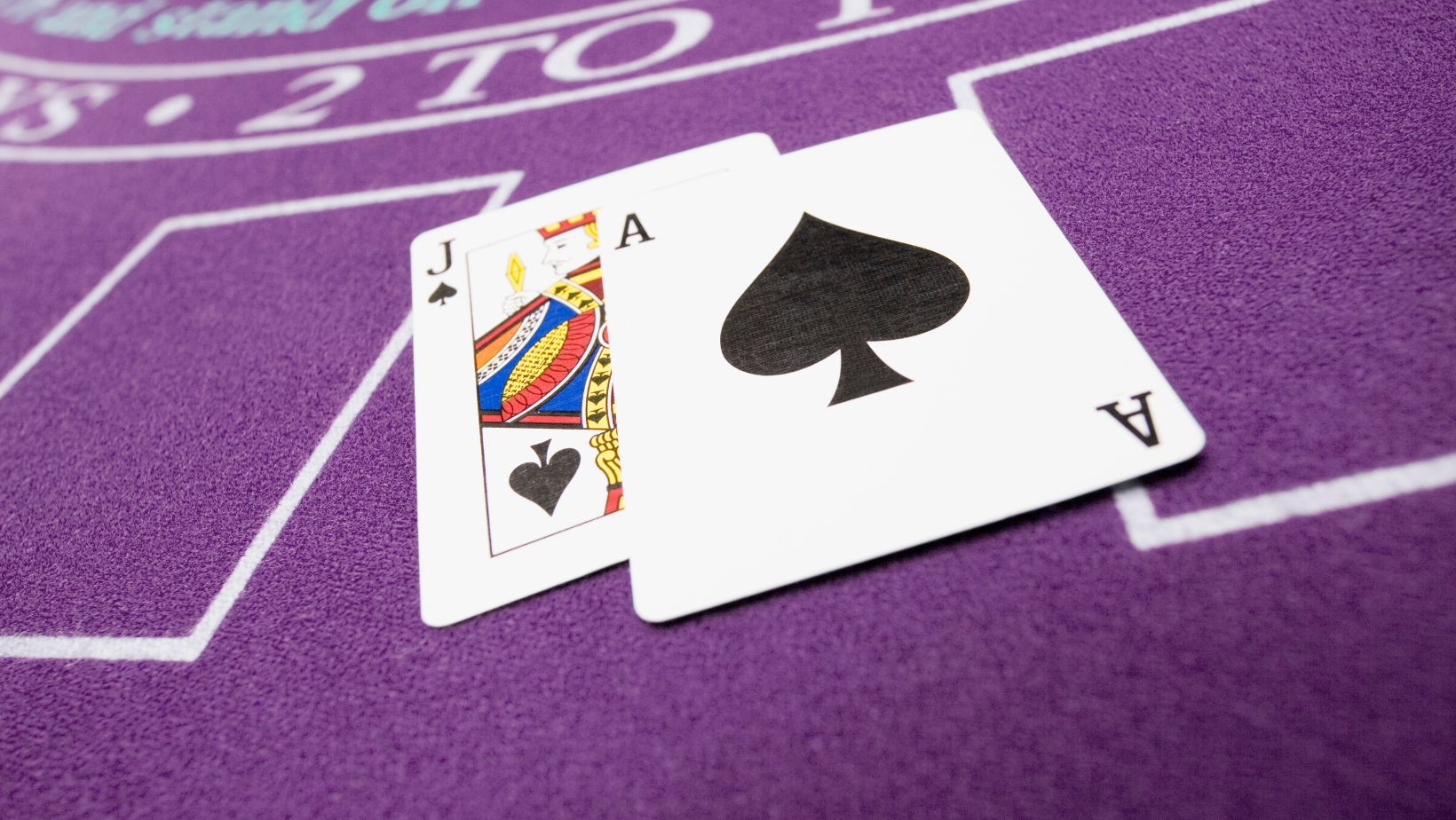
The fundamental mathematical difference between blackjack and a lottery lies in the nature of their events. Blackjack is a classic example of a system with dependent events. Each card dealt from the shoe changes the composition of the remaining deck, thereby altering the probability of the next card. The removal of a single Ace, for instance, measurably decreases the chance of any player, including the dealer, hitting a natural blackjack. This dependency is precisely what makes card counting possible; it’s a method of tracking the shifting probabilities to gain a statistical edge.
Conversely, lottery games like Powerball are built on a foundation of independent events. The outcome of one drawing has absolutely no influence on the next. The balls are randomized anew each time, meaning the numbers drawn last week have no bearing on the numbers drawn tonight. For developers, this simplifies certain calculations but introduces the challenge of managing player perceptions, as many fall prey to the gambler’s fallacy, believing a number is “due” to appear.
This distinction directly impacts how developers must model player behavior and game outcomes.
The Mathematics of Massive Jackpots: Combinatorics in Lottery Design
Lottery design is a masterclass in combinatorics, the branch of mathematics concerned with counting combinations and permutations. The astronomical odds against winning a grand prize are not arbitrary; they are the direct result of a specific mathematical formula. For example, in a game where a player must pick 6 numbers from a pool of 49, the total number of possible combinations is calculated using the combination formula C(n, k) = n! / (k!(n-k)!), where n is the total number of items to choose from, and k is the number of items to choose.
For a 6/49 lottery, this yields nearly 14 million unique combinations. Developers use these vast numbers to ensure that jackpots can roll over and grow to life-changing sums, which is the primary marketing driver for the game. The challenge isn’t accounting for player skill but in structuring prize tiers to reward players for partial matches, maintaining engagement despite the colossal odds of the top prize.
Whether skill or chance dominates, the ultimate goal for a developer is to create a sustainable and engaging economic model.
Balancing Payout Structures and Player Return (RTP)
The concept of Return to Player (RTP) is a critical metric that unifies both game types, yet it manifests in profoundly different ways. In blackjack, the high degree of player agency results in a very high theoretical RTP. The game provides frequent, small wins, creating a steady and engaging experience. The developer’s task is to ensure the game rules and payout for a “blackjack” (typically 3:2) create a small but persistent house edge over millions of hands.
Lotteries operate on the opposite end of the RTP spectrum. Their RTP is often legislated and typically falls between 50% and 60%, with the remaining revenue allocated to prizes, retailer commissions, and public funds. The player experience is defined by high volatility and a reward structure heavily skewed towards the top. The appeal isn’t the probability of winning, but the possibility of winning an immense sum.
This psychological driver, often explored in discussions on behavioral economics in game design, allows for a much lower RTP because the emotional value of the potential jackpot far outweighs the statistical expectation for the player. The developer’s job is to craft a prize structure that feels rewarding enough at lower tiers to prevent player churn between massive jackpot cycles.
FAQs
How does the concept of “volatility” differ between blackjack and lottery games from a developer’s perspective?
In game design, volatility (or variance) refers to the size and frequency of payouts. Blackjack is a low-volatility game; players can expect frequent, smaller wins and losses that keep their bankroll relatively stable over the short term. Lotteries are extremely high-volatility games.
Can principles from skill-based games be used to make lottery games more engaging?
Yes, developers are increasingly incorporating elements of player choice and perceived skill into lottery products. This can include “play-style” choices in digital scratch-offs, mini-games that reveal outcomes, or offering different risk/reward propositions.
From a developer’s standpoint, which is more complex to model mathematically: a game of skill or a game of pure chance?
Both present unique complexities. A game of pure chance like a lottery requires rigorous combinatorial and statistical modeling to ensure security and proper prize fund allocation but is predictable on a macro level.