
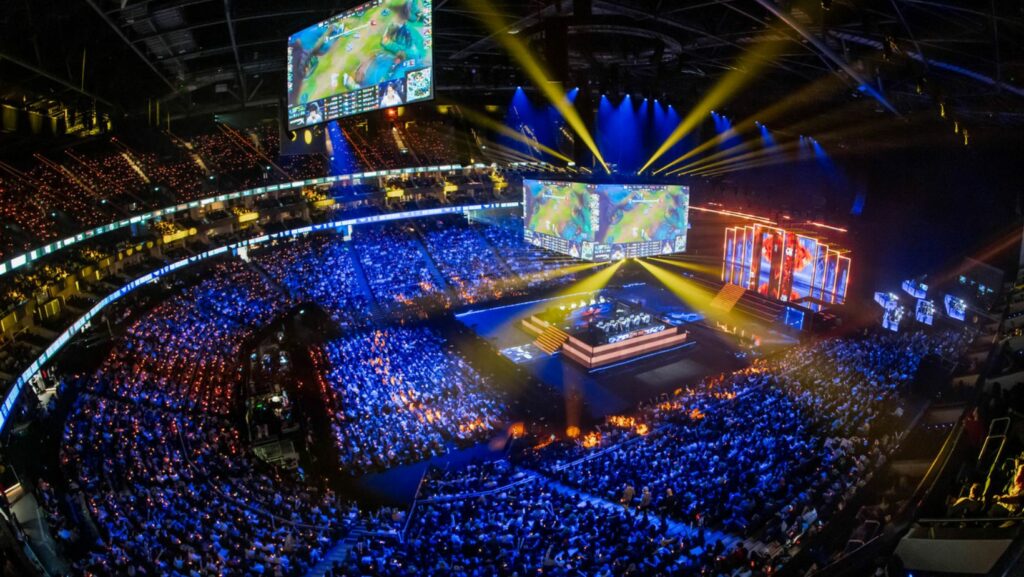
Thanks to constant development, esports is no longer just a competition between gamers. Today, it is a global industry with a large-scale economy, its own superstars, broadcasts, commentators, and even fan communities. Although traditional sports are still more popular, esports organisations are looking for new ideas and have learned to turn every tournament, highlight or analytical video into a powerful media product. In this article, we will tell you how esports teams are reshaping sports media coverage.
From Niche Streams to Global Broadcasts
At the beginning of their history, esports events were not very popular and were broadcast on amateur streaming platforms with minimal coverage. Today, leading tournaments in Dota 2, CS2, and LoL attract millions of viewers, and their broadcasts are among the most popular on Twitch and YouTube. Not only has the coverage changed in esports, but so has the format. Matches have become more interesting, the number of professional tournaments has increased, and the approach to organisation has changed.
Specialists work on the dynamics of the frame, journalists create pre-match stories, and production teams add elements of drama reminiscent of sports documentaries. Thanks to a comprehensive approach, the media component of esports has become more structured and understandable to the mass audience.
In addition, esports teams have acquired professional status. They invest in the brand, quality players and the economy. For example, organizations such as Team Vitality or G2 Esports have their own studios that publish a blog about their own teams, reactions to games and lifestyle content that expands the image of players outside of tournaments.
How Competitive Teams Drive Analytical and Betting Content Evolution
Along with the globalisation of the industry and the development of broadcasting, the approach to other components, including analytics, has also changed. Previously, matches were discussed only among a small circle of enthusiasts, and analysis was limited to simple statistics and brief comments from experts. Today, every top team has its own analysts who work on analysing every component of the game. It is this analytical aspect that has become the turning point for esports in becoming a professional industry.
As for the media, they are increasingly integrating expert content, including analysis of key moments, match replays, and interviews with coaches and players. Such materials improve the quality of information delivery and also advertise special services. By viewing such content, viewers increase their awareness of the game and, with the help of cs2 betting tips, learn important statistics. This includes not only the current game meta and statistics on heroes or players, but also the effectiveness of team strategies and other factors that influence results.
Such materials are simultaneously reinforced by both sports media and e-sports teams, which receive additional space to demonstrate their own professionalism. As a result, content becomes both entertaining and analytical, and the level of discussion in communities can be compared with the level of traditional sports analysts.
The Rise of Esports Journalism and New Media Formats

A separate role in the development of the e-sports ecosystem belongs to journalism. If a few years ago only enthusiasts covered tournaments and matches, now analytical materials about Counter-Strike 2 or Dota 2 appear even in major international publications.
Entire editorial teams have emerged that focus exclusively on esports, understand the internal logic of the disciplines, and write not only about results but also about other components. This includes the economics of esports, media rights, transfer policies, and trends in the gaming community. This has helped esports gain greater popularity, grow economically, and become on par with traditional sports.
New formats, podcasts and documentary series – make esports content more interesting for the average viewer. Fans have the opportunity not only to follow the statistics, but learn about the life of the players, their training, mental challenges and the path to great victories. This allows brands to integrate not through banal advertising, but through storytelling, where a team or a player is part of a great story.
Integration of Esports Teams into Mainstream Sports Ecosystem
One of the most significant developments in recent years has been the collaboration between esports and traditional sports organisations. Many well-known sports clubs are creating their own esports divisions, such as PSG, Manchester City and Barcelona. In addition, existing esports organisations are actively developing their areas of focus, covering various disciplines. This allows them to attract new audiences and test innovative formats for competitions and media content.
Traditional sports media outlets are also adapting to new trends. ESPN, Sky Sports and Marca now have separate sections dedicated to esports, where they publish regular updates, analytics and interviews, just like they do for traditional sports. As a result, both industries are becoming globalised, with esports borrowing visual standards, discipline and a professional approach to PR from traditional sports, while traditional sports are adopting esports’ speed of response, interactivity and community engagement.
Social networks play one of the most important roles in this process. Professional esports organizations maintain their pages, have a large audience on Twitter, TikTok, Instagram and YouTube. They themselves create media trends, generate memes, organize flash mobs and cover tournaments, which few people make of traditional sports teams. Thus, esports teams are more than just tournament participants, but also generators of news drives.
Conclusion
Putting all the facts together, we can say that esports teams have played a significant role in the development of the structure and dynamics of the sports media space. They have brought new ideas, speed, interactivity, and a format that combines analytics and entertainment. Today, esports has reached the same level as traditional sports, not only in terms of audience reach, but also in terms of what modern sports media should be. And if esports was once a niche hobby, it is now a driving force shaping modern trends in the entire sports world.